B2B Gift Card Platforms: Costs, Features & Use Cases
B2B Gift Card Platforms: Costs, Features & Use Cases

A B2B gift card platform lets a business buy, send, and manage gift cards for customers, prospects, employees, or partners. To choose one, compare the rewards your recipients can actually use, the full cost of sending, the workflow your team will run, and what happens when a reward is unclaimed or a send fails.
For sales and marketing teams, the best fit also keeps gift activity connected to the customer record. For a one-time employee thank-you, a straightforward bulk-send process may be enough. Start with the job you need the platform to do, then test that exact journey before buying.
Choose the right kind of gift card solution
“B2B gift card platform” covers several buying needs. Narrowing yours makes the shortlist more useful.
Your need | What to evaluate | Main question |
|---|---|---|
Send one brand to a known audience | The retailer's business gift card program | Can everyone use that brand in their location? |
Send different rewards from one place | A multibrand reward or gifting platform | Can recipients choose from relevant, locally usable options? |
Connect rewards to sales or customer activity | A platform with the required CRM integration or automation | What starts the send, and what is written back to the CRM? |
Embed rewards in your own product or process | A gift card or rewards API | Can your team build and maintain ordering, delivery, and failure handling? |
Sell gift cards redeemable at your own business | Gift card issuance and management software | Does it support your checkout, balances, and redemption channels? |
These categories overlap. A provider can offer a dashboard and an API for sending the same third-party rewards. An API is a way to connect software; it does not necessarily mean you are issuing your own gift cards. For example, Tremendous documents an API for sending rewards, including merchant gift cards.
RevSend belongs on the shortlist when your team wants gift-card campaigns alongside broader business gifting. Its plans include a digital and physical marketplace and recipient-choice campaigns, with additional features available by plan.
When businesses use gift cards
The strongest starting point is a clear reason to send and an identifiable recipient. Here are five useful campaign designs.
Sales meeting thank yous
Recognize the time someone spent in a workshop or substantive conversation. Make the message specific: reference a useful question or topic from the meeting. Define any eligibility rules before making the offer, and keep future commercial decisions separate from accepting the gift.
Customer referral rewards
Choose the event that earns the reward: an accepted introduction, a qualified opportunity, or a completed purchase. Make it easy for the advocate to understand whether that event has happened and who can answer questions. The referral gift card guide covers reward design in more detail.
Research and event participation
Offer a stated thank-you for a completed interview, workshop, or survey. Specify the required activity and how participants will receive their reward. Reward participation rather than a favorable answer, and confirm your research or event policies before launching.
Customer milestones
Acknowledge a completed rollout, a shared project, or a customer anniversary. Give the account owner a chance to check context before sending. An appreciation campaign should not depend on the customer agreeing to a renewal, reference, or expansion unless that is an explicitly approved incentive program.
Employee and partner recognition
Use consistent criteria for work anniversaries, achievements, or completed partner activities. Coordinate employee programs with HR and payroll, and check the recipient organization's gift rules for external programs. A digital format does not remove those requirements.
For help deciding which moments belong in a wider program, see our B2B corporate gifting guide.
What does a B2B gift card platform cost
Separate the value of the rewards from the cost of operating the program. Ask each provider for a written estimate using the same recipient count, countries, reward amounts, and workflow.
Reward value. Start with the number of eligible recipients multiplied by the amount each can receive. Ask when that value is charged or reserved: when funds are loaded, when a reward is sent, or when it is claimed.
Software and seats. Check subscription fees, minimum seats, contract length, setup charges, and which plan includes the features you need. A free platform plan should not be read as an offer of free gift-card value.
Funding and transaction charges. Ask about the payment method you intend to use, any processing or per-order fees, minimum funding amounts, and whether charges can reduce the recipient's reward.
International costs. Confirm the recipient's usable currency, the funding currency, any conversion fees, and whether denominations differ by market. Ask for the exact catalog available to your audience.
Connected tools and operating time. Include any CRM upgrade, automation subscription, implementation work, and time spent resolving exceptions. A lower license price can still leave your team with substantial manual work.
Unused rewards. Ask what can be canceled, when any refund or credit applies, where returned value goes, and whether a claim deadline differs from the selected card's terms. Do not build your budget around an assumed refund.
RevSend pricing
As of October 2, 2026, RevSend lists a free Starter plan and Pro at $99 per user per month with a three-user minimum. That makes the listed minimum Pro subscription $297 per month, before gift spend and any other applicable charges. The pricing page describes month-to-month plans without annual contracts.
Starter lists recipient-choice campaigns, address-free links and QR sends, tracking, and HubSpot access. Pro adds features including Salesforce, budget controls, API access, and automation. Check the current RevSend pricing against your intended setup before committing.
A simple budget example
Suppose 100 eligible recipients can each receive $25. The maximum planned face value is $2,500. Add the applicable software, funding, integration, and operating costs to that figure. This is a planning example, not a recommended gift amount or a RevSend quote.
Choose the amount based on the activity, recipient relationship, and approved policy. Avoid treating a bigger reward as a substitute for a relevant campaign.
Six things to check before choosing a provider
1 Relevant choice in each recipients location
A long catalog is useful only if the recipient can use the available rewards. Request a sample menu for every country in your campaign, at the value you plan to send.
Check merchant restrictions, currencies, minimum denominations, and how the catalog changes over time. If a preferred option disappears, ask whether the recipient receives an alternative or needs support. For a single-brand campaign, verify that the exact regional card matches the recipient's market.
2 A recipient experience you can test
Ask for a test reward and go through the complete process on a phone. Review what the recipient sees before clicking, how the sender is identified, what information is requested, and whether they need a separate account.
For a recipient-choice campaign, inspect the sequence: invitation, available options, selection, delivery of the chosen reward, and redemption instructions. Confirm when a selection becomes final and where the recipient goes for help.
A useful test also includes a recipient who cannot accept gifts. Make it easy to decline without awkward follow-up.
3 The workflow your team will actually use
A one-off order, CSV upload, CRM-assisted send, and fully automated trigger have different requirements. Ask the provider to demonstrate yours with realistic sample data.
For bulk sends, check how the system validates recipient data and how an operator reviews the final audience. For automation, establish the qualifying event, duplicate protection, funding check, and exception owner before enabling live sends.
Ask whether the connection is native, provided through middleware such as Zapier, or built with an API. Each route can be useful, but the setup, maintenance, and cost may differ.
4 Spending controls that match your organization
Decide who can choose rewards, create campaigns, approve spending, and send to recipients. Then test whether the required controls are included in your plan.
Ask what happens when a sender reaches a limit. Does the order stop, request approval, or charge a fallback payment method? Review repeated sends to the same person across teams, not just within one campaign.
For procurement, request the provider's current security and privacy documentation. Confirm the recipient information it needs, who can access it, and how long it is retained. Do not infer certifications or access controls from a general claim that a platform is secure.
5 Clear rules for failures and unused value
Walk through the less convenient cases during evaluation: an incorrect email, a duplicate order, an unavailable reward, insufficient funds, and a recipient who asks for help after the campaign ends.
Identify which problems your operator can fix and which require support. Ask for cancellation and refund terms that cover the specific reward type and its current status. An unclaimed link, a selected merchant card, and an already-used card should not be treated as interchangeable.
6 Reporting that answers a business question
Request a sample export before launch. Can you reconcile the campaign, recipient, reward amount, charges, status, and any returned funds?
Then decide how you will connect that information to the intended activity, such as a completed interview or qualified referral. Confirm what “sent,” “claimed,” and “redeemed” mean in that provider's reporting. Do not assume a claim proves the recipient spent the merchant card or that a gift caused a sale.
Our corporate gifting ROI guide explains how to assess campaign costs and business outcomes without treating every later conversion as gift-generated revenue.
How RevSend fits a gift card program
RevSend's documented workflows cover individual gift-card sends and bulk digital campaigns. For an individual send, the help center describes selecting a card, adding a recipient and message, entering the reward value, and choosing a delivery method. For a bulk send, operators create a digital campaign, select its gift-card options, upload recipient names and emails from a CSV, and review the messaging before placing the order.
See the help guides for sending a gift card and creating bulk digital gift orders.
HubSpot and automated sends
The RevSend HubSpot integration supports contact lookup, recipient associations with Contacts and Companies, and automatic Task logging when a gift order is confirmed. Its product page states that automatic sending depends on the HubSpot plan and RevSend setup.
A practical starting workflow is to let HubSpot notify an owner when a referral qualifies. The owner checks eligibility, sends the approved campaign, and verifies that the confirmed gift appears in the CRM. Before removing that human step, confirm the supported trigger, action, permissions, and failure handling for your account.
RevSend also has a separate Zapier integration. Its published actions include creating or sending digital gift campaign links. Another action sends a gift-card email through the Gmail or Outlook account connected in RevSend. Creating a link and delivering it are distinct actions, so check which step your workflow performs.
For teams evaluating Salesforce, the current pricing page lists it in Pro. Ask for a demonstration of your required workflow rather than assuming every CRM connection performs the same actions.
Pilot the full journey before scaling
Run one approved use case with a small, eligible audience before adding more teams. Keep a written test plan:
Confirm the recipient, qualifying activity, gift amount, and policy approval.
Check the campaign menu in every intended market.
Preview the message and complete an internal recipient test.
Verify funding, permissions, and what prevents repeated sends.
Test the CRM record or export your team will use for support and reporting.
Assign an owner for delivery problems, cancellation questions, and recipient support.
Review the actual cost and intended outcome before expanding.
Keep the first campaign narrow enough that you can explain every send. That makes it easier to spot both product gaps and unclear internal rules.
Frequently asked questions
What is the best B2B gift card platform
The best fit depends on your audience and process. Prioritize usable rewards, clear total cost, the required sending workflow, spending controls, and support. Test a complete campaign before choosing based on catalog size alone.
Can you buy and send gift cards in bulk
Yes. RevSend documents a bulk digital ordering process using an existing campaign and a recipient CSV. Check names, email addresses, eligibility, and messaging before submitting the order.
Can recipients choose their own gift card
RevSend offers recipient-choice campaigns. Confirm the options available for the amount and markets you plan to use. Choice within a campaign does not mean every reward in the broader catalog is available everywhere.
Do B2B gift card platforms support international recipients
Some do, including RevSend, whose pricing page lists international gift cards. Check the actual recipient-country catalog, currency, denominations, and merchant terms before making an offer. International availability is not a promise of universal coverage.
Can gift cards be sent automatically from a CRM
That depends on the integration and account setup. With RevSend, native HubSpot contact lookup and confirmed-order Task logging are documented; automatic sending has plan and setup requirements. Zapier provides additional published sending actions. Verify the exact route you intend to use.
What happens to an unclaimed gift card
Ask the provider for the terms that apply to that reward and status. Confirm the claim deadline, cancellation window, refund or credit treatment, and what changes after the recipient selects a merchant card. Never assume unclaimed value is automatically refunded.
Explore RevSend plans to match features to your audience, markets, workflow and reporting needs.
A B2B gift card platform lets a business buy, send, and manage gift cards for customers, prospects, employees, or partners. To choose one, compare the rewards your recipients can actually use, the full cost of sending, the workflow your team will run, and what happens when a reward is unclaimed or a send fails.
For sales and marketing teams, the best fit also keeps gift activity connected to the customer record. For a one-time employee thank-you, a straightforward bulk-send process may be enough. Start with the job you need the platform to do, then test that exact journey before buying.
Choose the right kind of gift card solution
“B2B gift card platform” covers several buying needs. Narrowing yours makes the shortlist more useful.
Your need | What to evaluate | Main question |
|---|---|---|
Send one brand to a known audience | The retailer's business gift card program | Can everyone use that brand in their location? |
Send different rewards from one place | A multibrand reward or gifting platform | Can recipients choose from relevant, locally usable options? |
Connect rewards to sales or customer activity | A platform with the required CRM integration or automation | What starts the send, and what is written back to the CRM? |
Embed rewards in your own product or process | A gift card or rewards API | Can your team build and maintain ordering, delivery, and failure handling? |
Sell gift cards redeemable at your own business | Gift card issuance and management software | Does it support your checkout, balances, and redemption channels? |
These categories overlap. A provider can offer a dashboard and an API for sending the same third-party rewards. An API is a way to connect software; it does not necessarily mean you are issuing your own gift cards. For example, Tremendous documents an API for sending rewards, including merchant gift cards.
RevSend belongs on the shortlist when your team wants gift-card campaigns alongside broader business gifting. Its plans include a digital and physical marketplace and recipient-choice campaigns, with additional features available by plan.
When businesses use gift cards
The strongest starting point is a clear reason to send and an identifiable recipient. Here are five useful campaign designs.
Sales meeting thank yous
Recognize the time someone spent in a workshop or substantive conversation. Make the message specific: reference a useful question or topic from the meeting. Define any eligibility rules before making the offer, and keep future commercial decisions separate from accepting the gift.
Customer referral rewards
Choose the event that earns the reward: an accepted introduction, a qualified opportunity, or a completed purchase. Make it easy for the advocate to understand whether that event has happened and who can answer questions. The referral gift card guide covers reward design in more detail.
Research and event participation
Offer a stated thank-you for a completed interview, workshop, or survey. Specify the required activity and how participants will receive their reward. Reward participation rather than a favorable answer, and confirm your research or event policies before launching.
Customer milestones
Acknowledge a completed rollout, a shared project, or a customer anniversary. Give the account owner a chance to check context before sending. An appreciation campaign should not depend on the customer agreeing to a renewal, reference, or expansion unless that is an explicitly approved incentive program.
Employee and partner recognition
Use consistent criteria for work anniversaries, achievements, or completed partner activities. Coordinate employee programs with HR and payroll, and check the recipient organization's gift rules for external programs. A digital format does not remove those requirements.
For help deciding which moments belong in a wider program, see our B2B corporate gifting guide.
What does a B2B gift card platform cost
Separate the value of the rewards from the cost of operating the program. Ask each provider for a written estimate using the same recipient count, countries, reward amounts, and workflow.
Reward value. Start with the number of eligible recipients multiplied by the amount each can receive. Ask when that value is charged or reserved: when funds are loaded, when a reward is sent, or when it is claimed.
Software and seats. Check subscription fees, minimum seats, contract length, setup charges, and which plan includes the features you need. A free platform plan should not be read as an offer of free gift-card value.
Funding and transaction charges. Ask about the payment method you intend to use, any processing or per-order fees, minimum funding amounts, and whether charges can reduce the recipient's reward.
International costs. Confirm the recipient's usable currency, the funding currency, any conversion fees, and whether denominations differ by market. Ask for the exact catalog available to your audience.
Connected tools and operating time. Include any CRM upgrade, automation subscription, implementation work, and time spent resolving exceptions. A lower license price can still leave your team with substantial manual work.
Unused rewards. Ask what can be canceled, when any refund or credit applies, where returned value goes, and whether a claim deadline differs from the selected card's terms. Do not build your budget around an assumed refund.
RevSend pricing
As of October 2, 2026, RevSend lists a free Starter plan and Pro at $99 per user per month with a three-user minimum. That makes the listed minimum Pro subscription $297 per month, before gift spend and any other applicable charges. The pricing page describes month-to-month plans without annual contracts.
Starter lists recipient-choice campaigns, address-free links and QR sends, tracking, and HubSpot access. Pro adds features including Salesforce, budget controls, API access, and automation. Check the current RevSend pricing against your intended setup before committing.
A simple budget example
Suppose 100 eligible recipients can each receive $25. The maximum planned face value is $2,500. Add the applicable software, funding, integration, and operating costs to that figure. This is a planning example, not a recommended gift amount or a RevSend quote.
Choose the amount based on the activity, recipient relationship, and approved policy. Avoid treating a bigger reward as a substitute for a relevant campaign.
Six things to check before choosing a provider
1 Relevant choice in each recipients location
A long catalog is useful only if the recipient can use the available rewards. Request a sample menu for every country in your campaign, at the value you plan to send.
Check merchant restrictions, currencies, minimum denominations, and how the catalog changes over time. If a preferred option disappears, ask whether the recipient receives an alternative or needs support. For a single-brand campaign, verify that the exact regional card matches the recipient's market.
2 A recipient experience you can test
Ask for a test reward and go through the complete process on a phone. Review what the recipient sees before clicking, how the sender is identified, what information is requested, and whether they need a separate account.
For a recipient-choice campaign, inspect the sequence: invitation, available options, selection, delivery of the chosen reward, and redemption instructions. Confirm when a selection becomes final and where the recipient goes for help.
A useful test also includes a recipient who cannot accept gifts. Make it easy to decline without awkward follow-up.
3 The workflow your team will actually use
A one-off order, CSV upload, CRM-assisted send, and fully automated trigger have different requirements. Ask the provider to demonstrate yours with realistic sample data.
For bulk sends, check how the system validates recipient data and how an operator reviews the final audience. For automation, establish the qualifying event, duplicate protection, funding check, and exception owner before enabling live sends.
Ask whether the connection is native, provided through middleware such as Zapier, or built with an API. Each route can be useful, but the setup, maintenance, and cost may differ.
4 Spending controls that match your organization
Decide who can choose rewards, create campaigns, approve spending, and send to recipients. Then test whether the required controls are included in your plan.
Ask what happens when a sender reaches a limit. Does the order stop, request approval, or charge a fallback payment method? Review repeated sends to the same person across teams, not just within one campaign.
For procurement, request the provider's current security and privacy documentation. Confirm the recipient information it needs, who can access it, and how long it is retained. Do not infer certifications or access controls from a general claim that a platform is secure.
5 Clear rules for failures and unused value
Walk through the less convenient cases during evaluation: an incorrect email, a duplicate order, an unavailable reward, insufficient funds, and a recipient who asks for help after the campaign ends.
Identify which problems your operator can fix and which require support. Ask for cancellation and refund terms that cover the specific reward type and its current status. An unclaimed link, a selected merchant card, and an already-used card should not be treated as interchangeable.
6 Reporting that answers a business question
Request a sample export before launch. Can you reconcile the campaign, recipient, reward amount, charges, status, and any returned funds?
Then decide how you will connect that information to the intended activity, such as a completed interview or qualified referral. Confirm what “sent,” “claimed,” and “redeemed” mean in that provider's reporting. Do not assume a claim proves the recipient spent the merchant card or that a gift caused a sale.
Our corporate gifting ROI guide explains how to assess campaign costs and business outcomes without treating every later conversion as gift-generated revenue.
How RevSend fits a gift card program
RevSend's documented workflows cover individual gift-card sends and bulk digital campaigns. For an individual send, the help center describes selecting a card, adding a recipient and message, entering the reward value, and choosing a delivery method. For a bulk send, operators create a digital campaign, select its gift-card options, upload recipient names and emails from a CSV, and review the messaging before placing the order.
See the help guides for sending a gift card and creating bulk digital gift orders.
HubSpot and automated sends
The RevSend HubSpot integration supports contact lookup, recipient associations with Contacts and Companies, and automatic Task logging when a gift order is confirmed. Its product page states that automatic sending depends on the HubSpot plan and RevSend setup.
A practical starting workflow is to let HubSpot notify an owner when a referral qualifies. The owner checks eligibility, sends the approved campaign, and verifies that the confirmed gift appears in the CRM. Before removing that human step, confirm the supported trigger, action, permissions, and failure handling for your account.
RevSend also has a separate Zapier integration. Its published actions include creating or sending digital gift campaign links. Another action sends a gift-card email through the Gmail or Outlook account connected in RevSend. Creating a link and delivering it are distinct actions, so check which step your workflow performs.
For teams evaluating Salesforce, the current pricing page lists it in Pro. Ask for a demonstration of your required workflow rather than assuming every CRM connection performs the same actions.
Pilot the full journey before scaling
Run one approved use case with a small, eligible audience before adding more teams. Keep a written test plan:
Confirm the recipient, qualifying activity, gift amount, and policy approval.
Check the campaign menu in every intended market.
Preview the message and complete an internal recipient test.
Verify funding, permissions, and what prevents repeated sends.
Test the CRM record or export your team will use for support and reporting.
Assign an owner for delivery problems, cancellation questions, and recipient support.
Review the actual cost and intended outcome before expanding.
Keep the first campaign narrow enough that you can explain every send. That makes it easier to spot both product gaps and unclear internal rules.
Frequently asked questions
What is the best B2B gift card platform
The best fit depends on your audience and process. Prioritize usable rewards, clear total cost, the required sending workflow, spending controls, and support. Test a complete campaign before choosing based on catalog size alone.
Can you buy and send gift cards in bulk
Yes. RevSend documents a bulk digital ordering process using an existing campaign and a recipient CSV. Check names, email addresses, eligibility, and messaging before submitting the order.
Can recipients choose their own gift card
RevSend offers recipient-choice campaigns. Confirm the options available for the amount and markets you plan to use. Choice within a campaign does not mean every reward in the broader catalog is available everywhere.
Do B2B gift card platforms support international recipients
Some do, including RevSend, whose pricing page lists international gift cards. Check the actual recipient-country catalog, currency, denominations, and merchant terms before making an offer. International availability is not a promise of universal coverage.
Can gift cards be sent automatically from a CRM
That depends on the integration and account setup. With RevSend, native HubSpot contact lookup and confirmed-order Task logging are documented; automatic sending has plan and setup requirements. Zapier provides additional published sending actions. Verify the exact route you intend to use.
What happens to an unclaimed gift card
Ask the provider for the terms that apply to that reward and status. Confirm the claim deadline, cancellation window, refund or credit treatment, and what changes after the recipient selects a merchant card. Never assume unclaimed value is automatically refunded.
Explore RevSend plans to match features to your audience, markets, workflow and reporting needs.
Recent Blog Posts

Work Anniversary Gifts by Milestone and Budget | RevSend

B2B Corporate Gifting: Strategy and Revenue Plays

Employee Appreciation Day Gifts: The Ultimate Guide for 2026

15 Best Valentine's Day Business Gifts for Clients & Employees (2026)

How to Increase Meeting Show Rates with Gifting (10 Examples)

RevSend Achieves SOC 2 Type II Certification

How to Re-Engage Stalled Sales Deals: 5 Email Templates

From Summer Slump to Q4 Pipeline: 3 Strategies to Re-Engage Cold Prospects

RevSend Named Among Best Business Tools by Research.com

How to Scale Corporate Gifting Without Losing the Personal Touch

Sales Outreach in the AI Era: How to Stand Out

The $27 Billion Lesson: How One CEO's Worst Day Built Slack's Empire
B2B Gift Card Platforms: Costs, Features & Use Cases

RevSend Becomes First-Ever Gifting Platform on Make.com!

How a $20 Gift Accomplished What Months of Cold Emails Couldn't

From Corks to Conversions: How Brex Turned $19K into 169 High-Value Customers

RevSend's New Zapier Integration Is Here!

9 Proven Sales Gifting Plays to Accelerate Deals & Drive ROI

Last-Minute Christmas Gift Cards for Clients and Teams

Fall Business Gifting Ideas: 5 Thoughtful Ways to Strengthen Client Relationships

Top Gift Ideas for Your Clients This Father’s Day

Summer Gifting Made Simple!

Want a strong Q1 pipeline? Seven gifting ideas to get you there

Referral Program Gift Cards: Incentives and Automation

25 Influencer Gifting Note Examples for PR Packages

How to Manage Custom Gift Packaging From Brief to Delivery

8 Bottlenecks That Slow Down Sales and Marketing Gifting

Corporate Gifting ROI: Formula, CRM Setup and Example

Corporate Holiday Gifts: Ideas, Budgets & 2026 Planning

How to Standardize Corporate Gifting Across Every Team

10 Corporate Gift Packaging Challenges Marketing Ops Can Prevent

How to Manage a Corporate Gift Catalog Teams Will Actually Use

9 Causes of an Inconsistent Corporate Gift Marketplace

9 Ways Gifting Platforms Support Customer Retention

Remote Team Gifting With Handwritten Notes for GTM
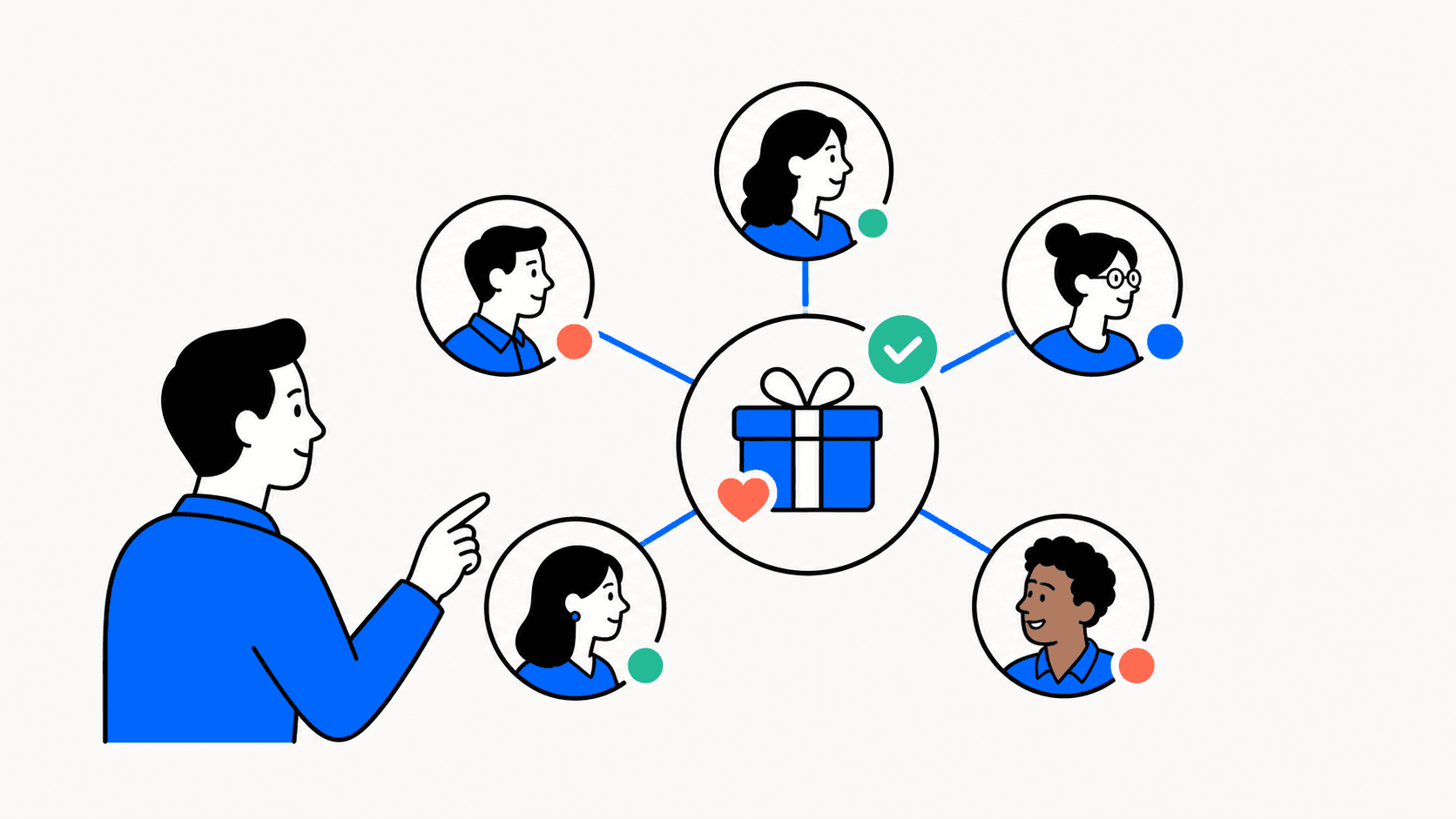
ABM Gifting: How to Engage Enterprise Buying Committees

How to Send Corporate Gifts Without an Address

Webinar Gifting: A Playbook for Attendance and Pipeline

Client Onboarding Gifts: A 30-Day B2B Workflow

Field Marketing Gifting: Before, During and After Events

8 Ways Gifting Platforms Improve B2B Marketing

How to Choose a Corporate Gifting Platform in 2026

9 Features to Look for in Corporate Gifting Platforms

How to Connect Gifting CRM Tracking in 2026

Announcing RevSend's Clay Integration
Holiday Gifts for Clients: Ideas and Budgets for 2026
Recent Blog Posts
Work Anniversary Gifts by Milestone and Budget | RevSend
B2B Corporate Gifting: Strategy and Revenue Plays
Employee Appreciation Day Gifts: The Ultimate Guide for 2026
15 Best Valentine's Day Business Gifts for Clients & Employees (2026)
How to Increase Meeting Show Rates with Gifting (10 Examples)
RevSend Achieves SOC 2 Type II Certification
How to Re-Engage Stalled Sales Deals: 5 Email Templates
From Summer Slump to Q4 Pipeline: 3 Strategies to Re-Engage Cold Prospects
RevSend Named Among Best Business Tools by Research.com
How to Scale Corporate Gifting Without Losing the Personal Touch
Sales Outreach in the AI Era: How to Stand Out
The $27 Billion Lesson: How One CEO's Worst Day Built Slack's Empire
B2B Gift Card Platforms: Costs, Features & Use Cases
RevSend Becomes First-Ever Gifting Platform on Make.com!
How a $20 Gift Accomplished What Months of Cold Emails Couldn't
From Corks to Conversions: How Brex Turned $19K into 169 High-Value Customers
RevSend's New Zapier Integration Is Here!
9 Proven Sales Gifting Plays to Accelerate Deals & Drive ROI
Last-Minute Christmas Gift Cards for Clients and Teams
Fall Business Gifting Ideas: 5 Thoughtful Ways to Strengthen Client Relationships
Top Gift Ideas for Your Clients This Father’s Day
Summer Gifting Made Simple!
Want a strong Q1 pipeline? Seven gifting ideas to get you there
Referral Program Gift Cards: Incentives and Automation
25 Influencer Gifting Note Examples for PR Packages
How to Manage Custom Gift Packaging From Brief to Delivery
8 Bottlenecks That Slow Down Sales and Marketing Gifting
Corporate Gifting ROI: Formula, CRM Setup and Example
Corporate Holiday Gifts: Ideas, Budgets & 2026 Planning
How to Standardize Corporate Gifting Across Every Team
10 Corporate Gift Packaging Challenges Marketing Ops Can Prevent
How to Manage a Corporate Gift Catalog Teams Will Actually Use
9 Causes of an Inconsistent Corporate Gift Marketplace
9 Ways Gifting Platforms Support Customer Retention
Remote Team Gifting With Handwritten Notes for GTM
ABM Gifting: How to Engage Enterprise Buying Committees
How to Send Corporate Gifts Without an Address
Webinar Gifting: A Playbook for Attendance and Pipeline
Client Onboarding Gifts: A 30-Day B2B Workflow
Field Marketing Gifting: Before, During and After Events
8 Ways Gifting Platforms Improve B2B Marketing
How to Choose a Corporate Gifting Platform in 2026
9 Features to Look for in Corporate Gifting Platforms
How to Connect Gifting CRM Tracking in 2026
Announcing RevSend's Clay Integration