ABM Gifting: How to Engage Enterprise Buying Committees
ABM Gifting: How to Engage Enterprise Buying Committees
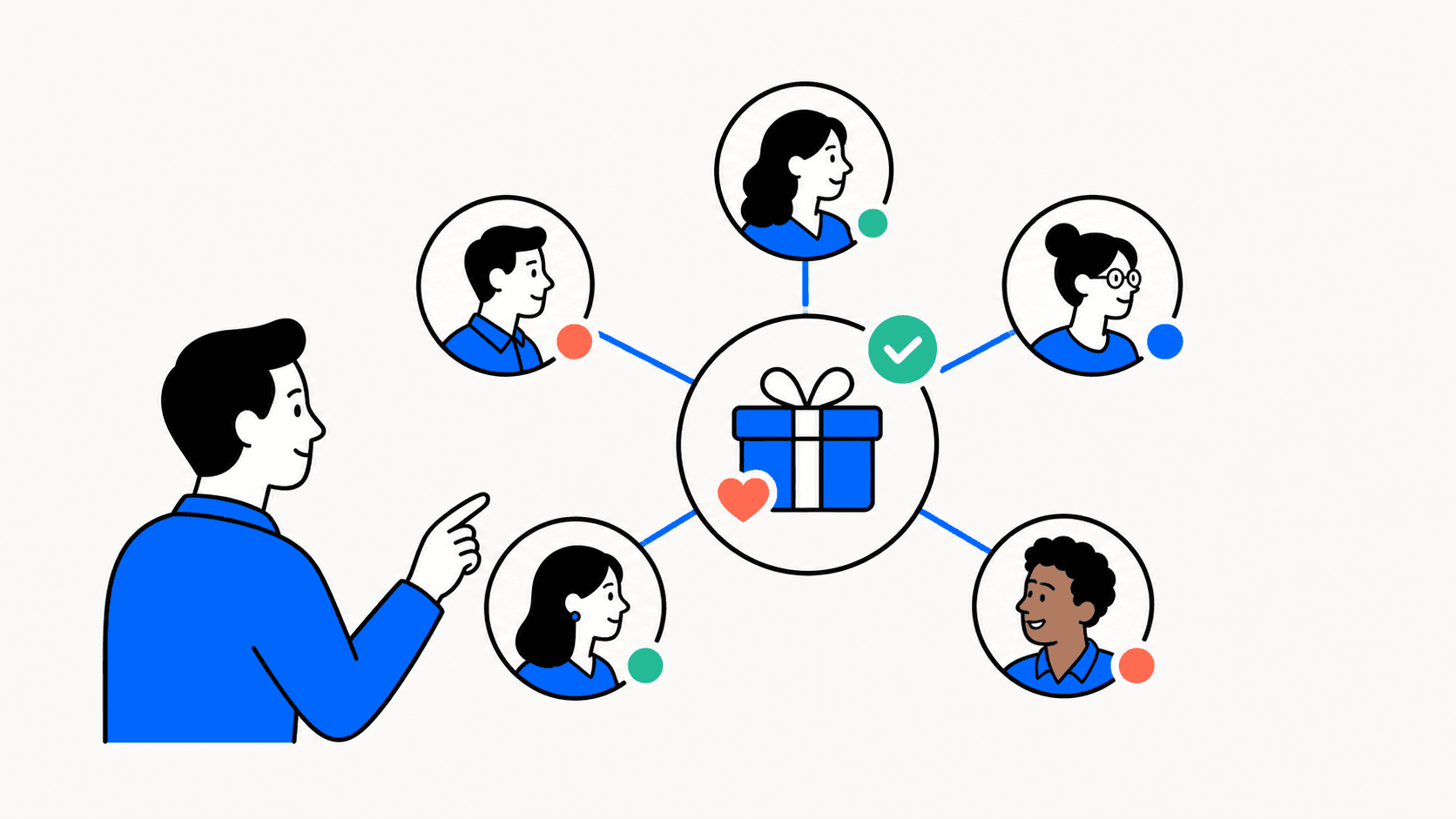
ABM gifting: How to engage enterprise buying committees
Your champion likes the product. Finance has not seen the business case. Security is waiting for answers. Procurement joins late, and an executive sponsor barely knows your company exists. Sending one expensive gift to the loudest contact will not fix that.
ABM gifting works when it supports a coordinated account plan across the buying committee. Map each stakeholder, decide what the relationship needs next, and use a relevant gift or shared experience to open a specific conversation. The goal is not to buy attention. It is to make a useful, human touch arrive at the right moment in a long decision.
Key takeaways
Treat the account as one buying system, not a list of unrelated contacts.
Map roles, influence, concerns, and relationship strength before choosing a gift.
Coordinate Sales and Marketing so stakeholders receive complementary touches.
Use different notes and next steps even when the gift value is consistent.
Measure committee coverage and deal movement, not gift claims alone.
What ABM gifting means for an enterprise account
ABM gifting is the use of thoughtful gifts, meals, handwritten notes, or recipient-choice rewards inside a named-account strategy. It connects each send to an account objective, stakeholder role, sales stage, and next action.
That is different from sending the same branded box to every director at a target company. Enterprise buying committees contain people with different authority and risk. A technical evaluator may need proof. Finance may need a cost model. The champion may need internal air cover. A gift should support the conversation relevant to that person.
A buying committee may include the problem owner, day-to-day users, technical evaluators, security, legal, procurement, finance, an executive sponsor, and a final economic buyer. One person can hold more than one role. Your map should reflect the real account, not a rigid template.
Build the buying-committee map before the ABM gifting plan
Start with evidence from discovery calls, CRM contacts, email threads, meeting attendees, and your champion. Do not assume that job title equals influence.
Stakeholder role: Champion
What they need: Internal confidence and momentum
Useful gifting moment: After a strong workshop or internal milestone
Natural next step: Build the mutual action plan
Stakeholder role: Economic buyer
What they need: Business value, risk, and priority
Useful gifting moment: Before or after an executive value review
Natural next step: Confirm decision criteria
Stakeholder role: Technical evaluator
What they need: Feasibility, integration, and support
Useful gifting moment: After a technical session
Natural next step: Close open requirements
Stakeholder role: Security or legal
What they need: Clear evidence and low friction
Useful gifting moment: After completing a demanding review
Natural next step: Confirm remaining blockers
Stakeholder role: Procurement
What they need: Process, pricing, and compliance
Useful gifting moment: Usually after a meaningful process milestone
Natural next step: Agree on steps and timing
Stakeholder role: Users
What they need: Practical value and adoption
Useful gifting moment: Workshop, pilot, or launch planning
Natural next step: Capture workflow feedback
Add four fields to every stakeholder record: role in the decision, level of influence, current relationship strength, and unresolved concern. Then add the next useful conversation. A gifting idea comes last.
How to design an ABM gifting play for multiple stakeholders
1. Define one account objective
Choose a measurable objective such as gaining access to the economic buyer, increasing buying-committee participation, completing technical validation, restarting a stalled evaluation, or recognizing the team after a demanding pilot. One account can have several activities, but the play needs one primary job.
2. Select the smallest useful stakeholder group
Do not gift every person you found on LinkedIn. Include the people who are active in or important to the current decision. For a workshop play, that may be three users, one technical owner, and your champion. For an executive alignment play, it may be the champion and economic buyer.
3. Choose a shared concept with personal delivery
Coordination does not require identical gifts. A shared lunch campaign can let each attendee choose what works for them. A project-completion play can use the same campaign theme with a different note for the champion, technical lead, and project manager.
Recipient choice is especially useful across a committee because dietary needs, preferences, location, and company policies vary. A single RevSend campaign can give the operator one budget while allowing recipients to choose from approved categories. See the broader guide to B2B gift card programs for campaign design principles.
4. Write role-specific notes
The note should explain the real reason for the gift and point naturally to the next step. Avoid product slogans and vague appreciation.
Champion: "Thanks for helping us understand how the regional teams work. I pulled the open questions into the mutual plan so you have one place to share internally."
Technical lead: "Thanks for the direct questions in today's architecture session. We documented the two edge cases and will send the test results Thursday. Lunch is on us."
Executive sponsor: "Appreciate the time today. We heard that adoption risk matters as much as speed, so the next review will focus on both."
5. Sequence the touches instead of sending everything at once
A committee-wide surprise can feel coordinated. It can also look like a campaign blast. Sequence sends around real interactions. Start with the active working group. Expand when a new stakeholder joins, a major review finishes, or the account reaches a decision milestone.
A coordinated 30-day enterprise gifting play
Timing: Day 0
Owner: AE
Touch: Confirm committee map with champion
Purpose: Find missing roles and concerns
Timing: Day 3
Owner: Marketing
Touch: Share role-relevant proof and workshop agenda
Purpose: Prepare the working group
Timing: Day 7
Owner: AE and SE
Touch: Run multi-stakeholder workshop
Purpose: Resolve business and technical questions
Timing: Day 7
Owner: RevOps
Touch: Trigger recipient-choice lunch thank-you
Purpose: Recognize participants promptly
Timing: Day 8
Owner: AE
Touch: Send personalized recap to each role
Purpose: Give every stakeholder a clear next step
Timing: Day 14
Owner: Executive sponsor
Touch: Peer note to economic buyer
Purpose: Align on value and risk
Timing: Day 21
Owner: AE
Touch: Update mutual action plan
Purpose: Keep the committee synchronized
Timing: Day 30
Owner: Team
Touch: Review engagement and blockers
Purpose: Continue, adjust, or stop the play
The gift is one line in the plan. The surrounding conversations make it useful.
Set an account-level budget, not a contact free-for-all
Create an annual or quarterly account budget based on opportunity value, strategic tier, relationship stage, and policy. Then reserve portions for specific moments. This prevents the first enthusiastic rep from spending the full amount before the committee is known.
A simple planning model is:
Account gifting budget = eligible stakeholders x approved value per moment x planned moments
Then apply a hard account cap. For example, a five-person working group with two approved moments at a fixed value is easier to govern than giving every rep a flexible card. Use RevSend's gifting calculator to model the program, then set your own thresholds from deal economics.
Coordinate Sales, Marketing, and RevOps
ABM breaks when each team sees a different account. Give the play clear ownership.
Sales owns relationship context, stakeholder validation, timing, and follow-up.
Marketing owns the account narrative, supporting content, campaign theme, and brand quality.
RevOps owns CRM structure, automation, budgets, deduplication, and reporting.
Finance and Legal own program policy, value limits, exceptions, and sensitive segments.
Use one account play record or campaign in the CRM. Every send should include the account, person, role, campaign, value, sender, purpose, and next action. If a second team tries to send another campaign to the same stakeholder, the record should make the conflict visible.
RevSend can connect gifting to the tools already used by revenue teams. Review the RevSend integrations when planning the CRM and orchestration layer.
Keep enterprise gifting thoughtful and policy-safe
Never make a gift conditional on a meeting, purchase, referral, or favorable decision. Keep the value proportionate, explain the business context, and make declining easy. Follow your company's policy and the recipient organization's rules. Some companies or roles prohibit gifts entirely.
Use alternatives when needed. A low-value meal for a working session, a handwritten thank-you, or a charity choice can preserve the gesture without forcing a recipient into an uncomfortable situation. If the account is public sector, healthcare, financial services, or another sensitive segment, route the play through your internal compliance process.
Measure buying-committee progress
Gift claims tell you that someone accepted a gift. They do not prove that the account advanced. Track coverage and movement.
Known stakeholders by role
Active stakeholders in the last 30 days
Committee roles with no relationship
Workshops or meetings with multiple roles present
New stakeholder introductions
Open concerns by role
Stage progression and cycle time
Spend, claims, and follow-up completion
Compare gifted accounts with similar eligible accounts and document what else changed. For a stronger measurement model, use RevSend's guide to corporate gifting ROI.
Common ABM gifting mistakes
Sending one generic gift to the whole committee
A coordinated theme is useful. A generic note is not. Keep the campaign consistent while making the reason and follow-up specific to each stakeholder.
Gifting only the executive
The economic buyer matters, but users, technical evaluators, and process owners often carry the work. Recognize real participation instead of using gifts only as a path to seniority.
Using gifting to replace account research
A gift does not fix the wrong contact, weak value proposition, or missing next step. Confirm the account hypothesis and committee map first.
Automating before the play is proven
Run the sequence manually with a few accounts. Learn where approvals, data, timing, and follow-up fail. Automate only the repeatable parts.
Frequently asked questions about ABM gifting
What is ABM gifting?
ABM gifting is a named-account tactic that connects a thoughtful gift or experience to a specific stakeholder, account objective, sales moment, and next action. It is most useful as one coordinated touch inside a broader Sales and Marketing plan.
Should every member of a buying committee receive a gift?
No. Include stakeholders who are active in or important to the current objective. Some people may prefer a useful resource, an executive conversation, or no gift at all. Relevance matters more than committee-wide coverage.
Should committee members receive the same gift?
They can share one campaign concept without receiving the same item. Recipient choice keeps the value and experience consistent while respecting different preferences, regions, and policies. The note and next action should still be role-specific.
When is the best time to send an ABM gift?
Send after earned moments: a completed workshop, a difficult review, a pilot milestone, a useful introduction, or an executive alignment session. Pre-meeting gifts can work, but they need careful policy review and should never imply an obligation.
How much should we spend on enterprise ABM gifting?
Set an account-level cap based on opportunity economics, stakeholder count, planned moments, and company policy. Use fixed campaign values for repeatable plays and require approval for higher-value or personal sends. There is no universal amount that fits every account.
How do we avoid making the gift feel like a bribe?
Keep it proportionate, untied to a decision, easy to decline, and grounded in a real interaction. Follow both companies' policies. A clear note thanking someone for specific work feels different from offering a reward for taking a meeting.
Make the account feel coordinated, not campaigned at
A strong enterprise play makes every stakeholder feel understood while keeping the account team aligned. Map the committee, choose one objective, personalize the reason, and coordinate the next action. RevSend gives teams one place to build the campaign, offer recipient choice, and connect the activity back to the revenue workflow.
Book a RevSend call to design an ABM gifting play for your target accounts.
ABM gifting: How to engage enterprise buying committees
Your champion likes the product. Finance has not seen the business case. Security is waiting for answers. Procurement joins late, and an executive sponsor barely knows your company exists. Sending one expensive gift to the loudest contact will not fix that.
ABM gifting works when it supports a coordinated account plan across the buying committee. Map each stakeholder, decide what the relationship needs next, and use a relevant gift or shared experience to open a specific conversation. The goal is not to buy attention. It is to make a useful, human touch arrive at the right moment in a long decision.
Key takeaways
Treat the account as one buying system, not a list of unrelated contacts.
Map roles, influence, concerns, and relationship strength before choosing a gift.
Coordinate Sales and Marketing so stakeholders receive complementary touches.
Use different notes and next steps even when the gift value is consistent.
Measure committee coverage and deal movement, not gift claims alone.
What ABM gifting means for an enterprise account
ABM gifting is the use of thoughtful gifts, meals, handwritten notes, or recipient-choice rewards inside a named-account strategy. It connects each send to an account objective, stakeholder role, sales stage, and next action.
That is different from sending the same branded box to every director at a target company. Enterprise buying committees contain people with different authority and risk. A technical evaluator may need proof. Finance may need a cost model. The champion may need internal air cover. A gift should support the conversation relevant to that person.
A buying committee may include the problem owner, day-to-day users, technical evaluators, security, legal, procurement, finance, an executive sponsor, and a final economic buyer. One person can hold more than one role. Your map should reflect the real account, not a rigid template.
Build the buying-committee map before the ABM gifting plan
Start with evidence from discovery calls, CRM contacts, email threads, meeting attendees, and your champion. Do not assume that job title equals influence.
Stakeholder role: Champion
What they need: Internal confidence and momentum
Useful gifting moment: After a strong workshop or internal milestone
Natural next step: Build the mutual action plan
Stakeholder role: Economic buyer
What they need: Business value, risk, and priority
Useful gifting moment: Before or after an executive value review
Natural next step: Confirm decision criteria
Stakeholder role: Technical evaluator
What they need: Feasibility, integration, and support
Useful gifting moment: After a technical session
Natural next step: Close open requirements
Stakeholder role: Security or legal
What they need: Clear evidence and low friction
Useful gifting moment: After completing a demanding review
Natural next step: Confirm remaining blockers
Stakeholder role: Procurement
What they need: Process, pricing, and compliance
Useful gifting moment: Usually after a meaningful process milestone
Natural next step: Agree on steps and timing
Stakeholder role: Users
What they need: Practical value and adoption
Useful gifting moment: Workshop, pilot, or launch planning
Natural next step: Capture workflow feedback
Add four fields to every stakeholder record: role in the decision, level of influence, current relationship strength, and unresolved concern. Then add the next useful conversation. A gifting idea comes last.
How to design an ABM gifting play for multiple stakeholders
1. Define one account objective
Choose a measurable objective such as gaining access to the economic buyer, increasing buying-committee participation, completing technical validation, restarting a stalled evaluation, or recognizing the team after a demanding pilot. One account can have several activities, but the play needs one primary job.
2. Select the smallest useful stakeholder group
Do not gift every person you found on LinkedIn. Include the people who are active in or important to the current decision. For a workshop play, that may be three users, one technical owner, and your champion. For an executive alignment play, it may be the champion and economic buyer.
3. Choose a shared concept with personal delivery
Coordination does not require identical gifts. A shared lunch campaign can let each attendee choose what works for them. A project-completion play can use the same campaign theme with a different note for the champion, technical lead, and project manager.
Recipient choice is especially useful across a committee because dietary needs, preferences, location, and company policies vary. A single RevSend campaign can give the operator one budget while allowing recipients to choose from approved categories. See the broader guide to B2B gift card programs for campaign design principles.
4. Write role-specific notes
The note should explain the real reason for the gift and point naturally to the next step. Avoid product slogans and vague appreciation.
Champion: "Thanks for helping us understand how the regional teams work. I pulled the open questions into the mutual plan so you have one place to share internally."
Technical lead: "Thanks for the direct questions in today's architecture session. We documented the two edge cases and will send the test results Thursday. Lunch is on us."
Executive sponsor: "Appreciate the time today. We heard that adoption risk matters as much as speed, so the next review will focus on both."
5. Sequence the touches instead of sending everything at once
A committee-wide surprise can feel coordinated. It can also look like a campaign blast. Sequence sends around real interactions. Start with the active working group. Expand when a new stakeholder joins, a major review finishes, or the account reaches a decision milestone.
A coordinated 30-day enterprise gifting play
Timing: Day 0
Owner: AE
Touch: Confirm committee map with champion
Purpose: Find missing roles and concerns
Timing: Day 3
Owner: Marketing
Touch: Share role-relevant proof and workshop agenda
Purpose: Prepare the working group
Timing: Day 7
Owner: AE and SE
Touch: Run multi-stakeholder workshop
Purpose: Resolve business and technical questions
Timing: Day 7
Owner: RevOps
Touch: Trigger recipient-choice lunch thank-you
Purpose: Recognize participants promptly
Timing: Day 8
Owner: AE
Touch: Send personalized recap to each role
Purpose: Give every stakeholder a clear next step
Timing: Day 14
Owner: Executive sponsor
Touch: Peer note to economic buyer
Purpose: Align on value and risk
Timing: Day 21
Owner: AE
Touch: Update mutual action plan
Purpose: Keep the committee synchronized
Timing: Day 30
Owner: Team
Touch: Review engagement and blockers
Purpose: Continue, adjust, or stop the play
The gift is one line in the plan. The surrounding conversations make it useful.
Set an account-level budget, not a contact free-for-all
Create an annual or quarterly account budget based on opportunity value, strategic tier, relationship stage, and policy. Then reserve portions for specific moments. This prevents the first enthusiastic rep from spending the full amount before the committee is known.
A simple planning model is:
Account gifting budget = eligible stakeholders x approved value per moment x planned moments
Then apply a hard account cap. For example, a five-person working group with two approved moments at a fixed value is easier to govern than giving every rep a flexible card. Use RevSend's gifting calculator to model the program, then set your own thresholds from deal economics.
Coordinate Sales, Marketing, and RevOps
ABM breaks when each team sees a different account. Give the play clear ownership.
Sales owns relationship context, stakeholder validation, timing, and follow-up.
Marketing owns the account narrative, supporting content, campaign theme, and brand quality.
RevOps owns CRM structure, automation, budgets, deduplication, and reporting.
Finance and Legal own program policy, value limits, exceptions, and sensitive segments.
Use one account play record or campaign in the CRM. Every send should include the account, person, role, campaign, value, sender, purpose, and next action. If a second team tries to send another campaign to the same stakeholder, the record should make the conflict visible.
RevSend can connect gifting to the tools already used by revenue teams. Review the RevSend integrations when planning the CRM and orchestration layer.
Keep enterprise gifting thoughtful and policy-safe
Never make a gift conditional on a meeting, purchase, referral, or favorable decision. Keep the value proportionate, explain the business context, and make declining easy. Follow your company's policy and the recipient organization's rules. Some companies or roles prohibit gifts entirely.
Use alternatives when needed. A low-value meal for a working session, a handwritten thank-you, or a charity choice can preserve the gesture without forcing a recipient into an uncomfortable situation. If the account is public sector, healthcare, financial services, or another sensitive segment, route the play through your internal compliance process.
Measure buying-committee progress
Gift claims tell you that someone accepted a gift. They do not prove that the account advanced. Track coverage and movement.
Known stakeholders by role
Active stakeholders in the last 30 days
Committee roles with no relationship
Workshops or meetings with multiple roles present
New stakeholder introductions
Open concerns by role
Stage progression and cycle time
Spend, claims, and follow-up completion
Compare gifted accounts with similar eligible accounts and document what else changed. For a stronger measurement model, use RevSend's guide to corporate gifting ROI.
Common ABM gifting mistakes
Sending one generic gift to the whole committee
A coordinated theme is useful. A generic note is not. Keep the campaign consistent while making the reason and follow-up specific to each stakeholder.
Gifting only the executive
The economic buyer matters, but users, technical evaluators, and process owners often carry the work. Recognize real participation instead of using gifts only as a path to seniority.
Using gifting to replace account research
A gift does not fix the wrong contact, weak value proposition, or missing next step. Confirm the account hypothesis and committee map first.
Automating before the play is proven
Run the sequence manually with a few accounts. Learn where approvals, data, timing, and follow-up fail. Automate only the repeatable parts.
Frequently asked questions about ABM gifting
What is ABM gifting?
ABM gifting is a named-account tactic that connects a thoughtful gift or experience to a specific stakeholder, account objective, sales moment, and next action. It is most useful as one coordinated touch inside a broader Sales and Marketing plan.
Should every member of a buying committee receive a gift?
No. Include stakeholders who are active in or important to the current objective. Some people may prefer a useful resource, an executive conversation, or no gift at all. Relevance matters more than committee-wide coverage.
Should committee members receive the same gift?
They can share one campaign concept without receiving the same item. Recipient choice keeps the value and experience consistent while respecting different preferences, regions, and policies. The note and next action should still be role-specific.
When is the best time to send an ABM gift?
Send after earned moments: a completed workshop, a difficult review, a pilot milestone, a useful introduction, or an executive alignment session. Pre-meeting gifts can work, but they need careful policy review and should never imply an obligation.
How much should we spend on enterprise ABM gifting?
Set an account-level cap based on opportunity economics, stakeholder count, planned moments, and company policy. Use fixed campaign values for repeatable plays and require approval for higher-value or personal sends. There is no universal amount that fits every account.
How do we avoid making the gift feel like a bribe?
Keep it proportionate, untied to a decision, easy to decline, and grounded in a real interaction. Follow both companies' policies. A clear note thanking someone for specific work feels different from offering a reward for taking a meeting.
Make the account feel coordinated, not campaigned at
A strong enterprise play makes every stakeholder feel understood while keeping the account team aligned. Map the committee, choose one objective, personalize the reason, and coordinate the next action. RevSend gives teams one place to build the campaign, offer recipient choice, and connect the activity back to the revenue workflow.
Book a RevSend call to design an ABM gifting play for your target accounts.
Recent Blog Posts

Work Anniversary Gifts: Ideas, Budgets and Automation

B2B Corporate Gifting: Strategy and Revenue Plays
Employee Appreciation Day Gifts: The Ultimate Guide for 2026

15 Best Valentine's Day Business Gifts for Clients & Employees (2026)

How to Increase Meeting Show Rates with Gifting (10 Examples)

RevSend Achieves SOC 2 Type II Certification
How to Re-Engage Stalled Sales Deals: 5 Email Templates

From Summer Slump to Q4 Pipeline: 3 Strategies to Re-Engage Cold Prospects

RevSend Named Among Best Business Tools by Research.com

How to Scale Corporate Gifting Without Losing the Personal Touch

Sales Outreach in the AI Era: How to Stand Out

The $27 Billion Lesson: How One CEO's Worst Day Built Slack's Empire

B2B Gift Card Platform: Buyer's Guide for GTM Teams

RevSend Becomes First-Ever Gifting Platform on Make.com!

How a $20 Gift Accomplished What Months of Cold Emails Couldn't

From Corks to Conversions: How Brex Turned $19K into 169 High-Value Customers

RevSend's New Zapier Integration Is Here!

9 Proven Sales Gifting Plays to Accelerate Deals & Drive ROI

Last-Minute Christmas Gift Cards for Busy Professionals

Fall Business Gifting Ideas: 5 Thoughtful Ways to Strengthen Client Relationships

Top Gift Ideas for Your Clients This Father’s Day

Summer Gifting Made Simple!

Want a strong Q1 pipeline? Seven gifting ideas to get you there

Referral Program Gift Cards: Incentives and Automation

25 Influencer Gifting Note Examples for PR Packages

How to Manage Custom Gift Packaging From Brief to Delivery

8 Bottlenecks That Slow Down Sales and Marketing Gifting

Corporate Gifting ROI: Formula, CRM Setup and Example

Corporate Holiday Gifting: 2026 Campaign Playbook

How to Standardize Corporate Gifting Across Every Team

10 Corporate Gift Packaging Challenges Marketing Ops Can Prevent

How to Manage a Corporate Gift Catalog Teams Will Actually Use

9 Causes of an Inconsistent Corporate Gift Marketplace

9 Ways Gifting Platforms Support Customer Retention

Remote Team Gifting With Handwritten Notes for GTM
ABM Gifting: How to Engage Enterprise Buying Committees

How to Send Corporate Gifts Without an Address

Webinar Gifting: A Playbook for Attendance and Pipeline

Client Onboarding Gifts: A 30-Day B2B Workflow

Field Marketing Gifting: Before, During and After Events

8 Ways Gifting Platforms Improve B2B Marketing

How to Choose a Corporate Gifting Platform in 2026

9 Features to Look for in Corporate Gifting Platforms

How to Connect Gifting CRM Tracking in 2026

Announcing RevSend's Clay Integration
Recent Blog Posts
Work Anniversary Gifts: Ideas, Budgets and Automation
B2B Corporate Gifting: Strategy and Revenue Plays
Employee Appreciation Day Gifts: The Ultimate Guide for 2026
15 Best Valentine's Day Business Gifts for Clients & Employees (2026)
How to Increase Meeting Show Rates with Gifting (10 Examples)
RevSend Achieves SOC 2 Type II Certification
How to Re-Engage Stalled Sales Deals: 5 Email Templates
From Summer Slump to Q4 Pipeline: 3 Strategies to Re-Engage Cold Prospects
RevSend Named Among Best Business Tools by Research.com
How to Scale Corporate Gifting Without Losing the Personal Touch
Sales Outreach in the AI Era: How to Stand Out
The $27 Billion Lesson: How One CEO's Worst Day Built Slack's Empire
B2B Gift Card Platform: Buyer's Guide for GTM Teams
RevSend Becomes First-Ever Gifting Platform on Make.com!
How a $20 Gift Accomplished What Months of Cold Emails Couldn't
From Corks to Conversions: How Brex Turned $19K into 169 High-Value Customers
RevSend's New Zapier Integration Is Here!
9 Proven Sales Gifting Plays to Accelerate Deals & Drive ROI
Last-Minute Christmas Gift Cards for Busy Professionals
Fall Business Gifting Ideas: 5 Thoughtful Ways to Strengthen Client Relationships
Top Gift Ideas for Your Clients This Father’s Day
Summer Gifting Made Simple!
Want a strong Q1 pipeline? Seven gifting ideas to get you there
Referral Program Gift Cards: Incentives and Automation
25 Influencer Gifting Note Examples for PR Packages
How to Manage Custom Gift Packaging From Brief to Delivery
8 Bottlenecks That Slow Down Sales and Marketing Gifting
Corporate Gifting ROI: Formula, CRM Setup and Example
Corporate Holiday Gifting: 2026 Campaign Playbook
How to Standardize Corporate Gifting Across Every Team
10 Corporate Gift Packaging Challenges Marketing Ops Can Prevent
How to Manage a Corporate Gift Catalog Teams Will Actually Use
9 Causes of an Inconsistent Corporate Gift Marketplace
9 Ways Gifting Platforms Support Customer Retention
Remote Team Gifting With Handwritten Notes for GTM
ABM Gifting: How to Engage Enterprise Buying Committees
How to Send Corporate Gifts Without an Address
Webinar Gifting: A Playbook for Attendance and Pipeline
Client Onboarding Gifts: A 30-Day B2B Workflow
Field Marketing Gifting: Before, During and After Events
8 Ways Gifting Platforms Improve B2B Marketing
How to Choose a Corporate Gifting Platform in 2026
9 Features to Look for in Corporate Gifting Platforms
How to Connect Gifting CRM Tracking in 2026